
You need a code for an app, and you'd rather not hand over your real number. A quick search turns up a website that says "free SMS, no sign-up." It shows a list of phone numbers, and you can use any of them right now.
It looks like a perfect shortcut. So what's the catch?
There is one, and it's a bigger deal than most people realize. Let's go through it honestly, including the cases where a free site is actually fine.
What are free SMS receiving sites?
These are websites that list phone numbers anyone can use. You type one of those numbers into an app, the app sends a code, and the code shows up on a public page of the site. No account, no payment, nothing to install.
People use them for all kinds of reasons: to avoid giving away a personal number, to try out an app quickly, or just out of curiosity. Those are reasonable goals. The trouble is how these sites work behind the scenes.
The 5 real risks
1. Anyone can read your code
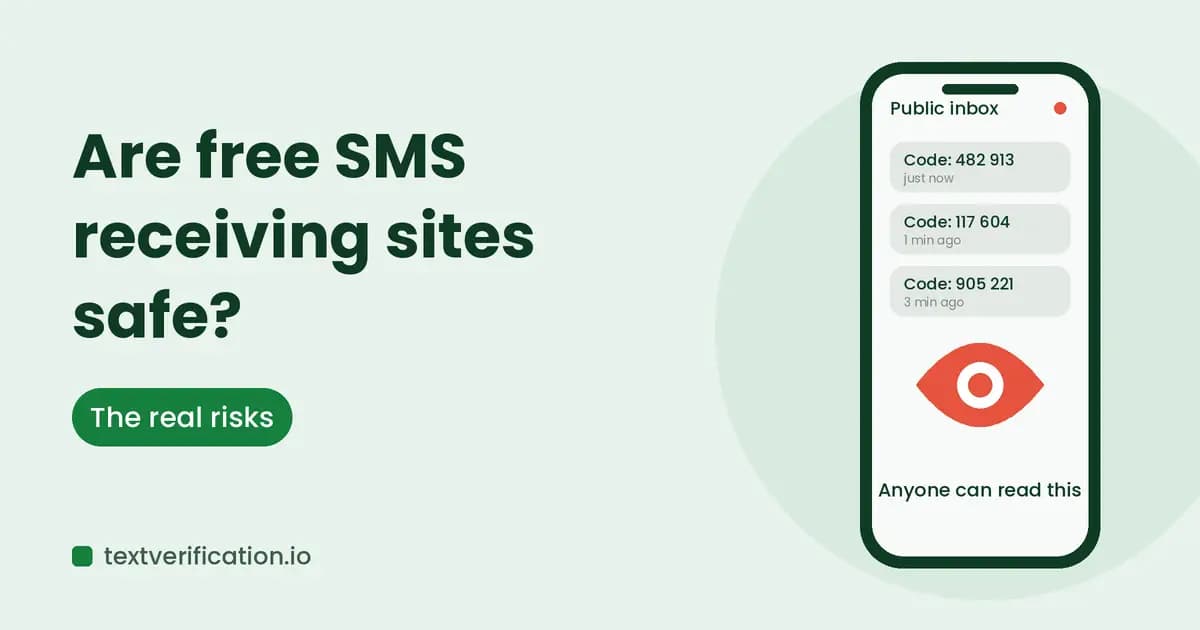
This is the big one. On most free sites, the inbox is public. Every message sent to that number is visible to everybody who opens the page.
Think about what that means. If you sign up for something with a public number, anyone can see your verification code. And later, anyone can go to that app, enter the same number, choose "forgot password," and read the reset code on the same page. Your account is only as private as a billboard.
2. The number has probably been used a hundred times already
Free numbers are shared by huge numbers of people. By the time you get one, it may have been used to sign up on the same app many times. Apps notice that. A number tied to dozens of accounts often gets flagged or refused.
Many free numbers are also VoIP, which a lot of apps reject on sight. (We explain why in our guide to VoIP vs non-VoIP numbers.) So even when the site works, the app may not accept the number.
3. The number can disappear
Free numbers come and go without warning. If you need a code later, say for a security check or account recovery, that number might be gone. You could be locked out of an account you can't prove is yours.
4. You don't know who runs the site
Most free sites don't say who's behind them, and many have no real privacy policy. They typically earn money from ads, and some of those ads are aggressive or misleading. Not every free site is shady, but you rarely have a way to tell the good from the bad, and you're trusting them with your sign-ups.
5. No support, no refund
When a code doesn't arrive, there's nobody to ask and nothing to get back. You just try another number and hope.
Public free sites vs a private inbox
Free public SMS site | Private SMS service | |
|---|---|---|
Who can see your codes | Anyone who opens the page | Only you, in your own dashboard |
Number history | Shared and reused heavily | Assigned to you for your order |
Line type | Often VoIP | Can be carrier-issued (non-VoIP) |
Number stays available | Can vanish anytime | Rentals last as long as you pay for them |
Support if a code fails | Usually none | Usually yes |
Cost | Free | Small per-number fee |
When is a free site actually okay?
Let's be fair. A free public number can be fine for something with no stakes at all. For example, checking how a sign-up page looks, or trying a forum you'll never use again and have no personal data on.
The rule of thumb: if you'd be fine with a stranger getting into the account, a free site is acceptable. If you wouldn't, it isn't.
Never use a public number for:
Email accounts
Banking, payment, or crypto accounts
Social media you care about
Anything that holds personal data, money, or your contacts
Safer ways to receive a code
If you want privacy without gambling on a public inbox, you have a few real options:
A second SIM or eSIM. A separate real number that only you control.
A VoIP app number. Fine for calls, though many apps won't accept it for sign-up codes.
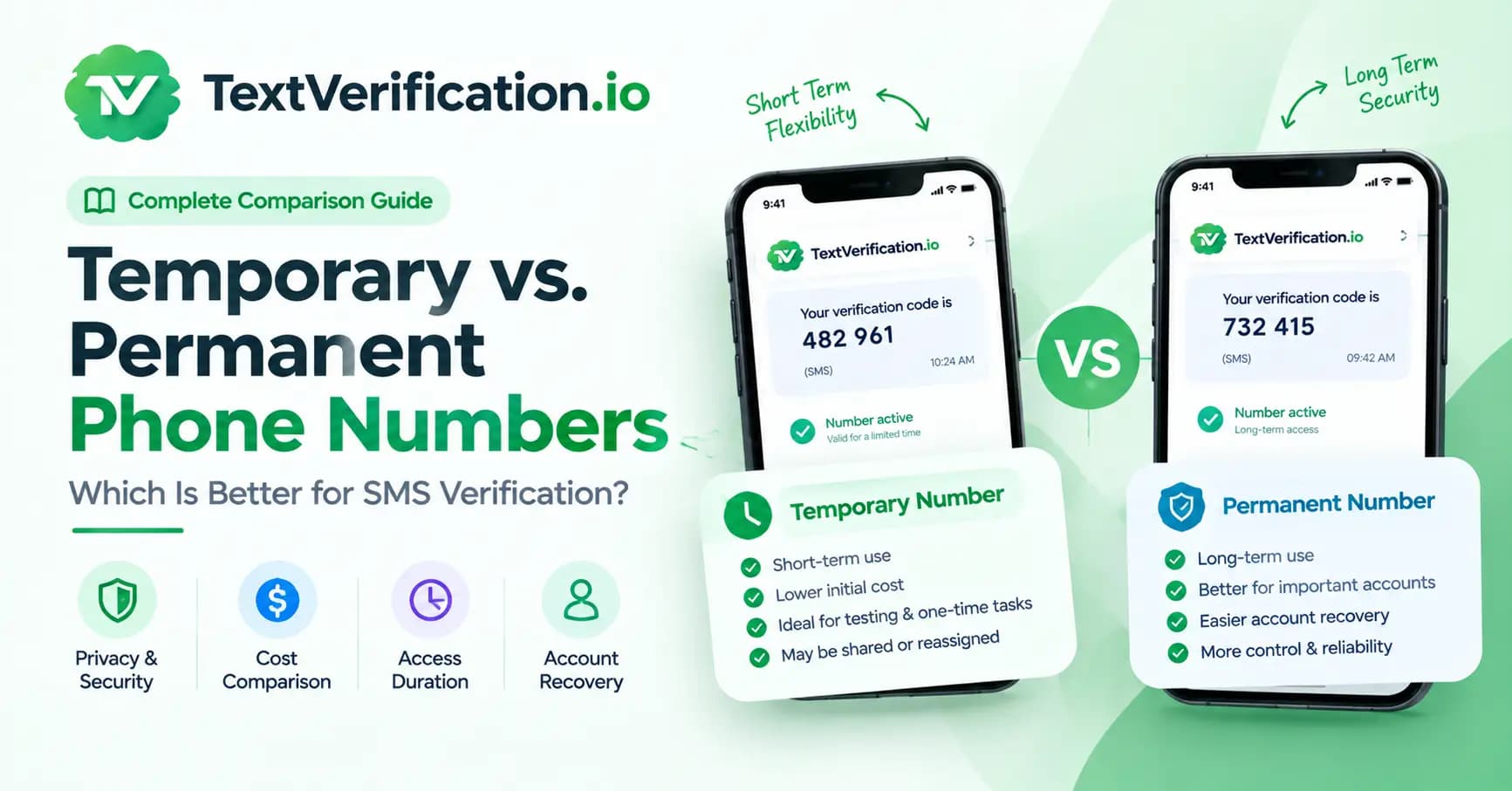
A private temporary or rental number. A carrier-issued number that delivers codes to your own dashboard.
The third one is what we do at TextVerification. You pay per number, there's no subscription, and codes land in your private dashboard instead of a public page. If no code arrives, the full amount goes back to your balance automatically. We can't promise that every app will accept every number, and we ask that you use our numbers for lawful purposes only. If you're curious, you can look at our prices.
Already used a free site for an account? Do this
If you signed up for something that matters using a public number, fix it soon:
Log in and change the phone number on the account to one you control.
Change the password, and make sure your recovery email is yours.
Turn on two-factor authentication with an authenticator app instead of SMS.
Check the account's login history for anything you don't recognize.
If you can't log in anymore because the number has changed, contact the app's support right away.
Quick FAQ
Are free SMS receiving sites legal? Using one to receive a text isn't illegal in most places. Just remember that each app has its own rules, and you're expected to follow them.
Can the owners of a free site read my messages? On a public site, everyone can read them, including the owners. Assume nothing sent there is private.
Will free numbers work for apps like WhatsApp or Telegram? Often not. Shared numbers are heavily used and frequently VoIP, so strict apps tend to reject them. No honest service can promise a 100% success rate on every app.
Is a paid temporary number automatically safe? Not automatically. Look for a private inbox, a clear privacy policy, and a refund policy. You can read how we handle data in our privacy policy and find more answers in our FAQ.
The takeaway
Free SMS sites aren't evil, but they're built for convenience, not privacy. The moment you use one for something you care about, you've handed your verification code to anyone who's looking.
So keep them for throwaway tests, and use a number only you can see for everything else. If you want more ways to keep your number private, take a look at our guide on protecting your phone number from spam and leaks.