
Introduction
Phone numbers are used for much more than making calls. Websites and mobile apps also use them for account registration, SMS verification, login security, and password recovery.
However, not all phone numbers work in the same way. Two common categories are VoIP numbers and non-VoIP numbers. Understanding the difference can help you choose a suitable number for communication, business operations, or supported SMS verification workflows.
A VoIP number uses Voice over Internet Protocol technology to route calls over an internet connection. A non-VoIP number generally refers to a number associated with a traditional telephone or mobile carrier service rather than a VoIP service.
In this guide, we'll explain how these number types differ, compare their advantages and limitations, and discuss why some websites accept certain numbers but reject others.
If you're exploring SMS verification options, visit TextVerification.io to learn more about the service.
What Is a VoIP Number?
VoIP stands for Voice over Internet Protocol. It is a technology that allows voice communication to travel over internet networks rather than relying exclusively on traditional telephone networks.
A VoIP phone number can be assigned to a service that handles calls through an app, computer, desk phone, or other internet-connected device.
Depending on the provider, VoIP services may also support text messaging, voicemail, call forwarding, and business communication features.
Common Uses of VoIP Numbers
VoIP numbers are frequently used for:
Business phone systems.
Customer support and sales teams.
Remote work and distributed teams.
Internet-based calling.
Call routing and forwarding.
Business communication across different locations.
For example, a company may use a VoIP system to let employees answer customer calls from different locations while maintaining a central business number.
Advantages of VoIP Numbers
1. Flexible communication
VoIP services can allow users to handle calls through supported internet-connected devices.
2. Business features
Depending on the plan, features may include call routing, voicemail, extensions, and team management.
3. Convenient remote access
Employees may be able to use the same business phone system while working from different locations.
4. Scalable service
Businesses can often add users or extensions without installing a separate traditional telephone line for each employee.
Limitations of VoIP Numbers
VoIP services also have limitations:
Call quality may depend on internet connectivity.
Some services may restrict SMS functionality.
Emergency calling capabilities vary by provider and location.
Certain websites may reject VoIP numbers during account verification.
Features and number availability depend on the provider's terms.
A VoIP number can be useful for business communication, but it may not be accepted for every online verification process.
What Is a Non-VoIP Number?
A non-VoIP number generally refers to a phone number associated with a traditional telephone carrier, such as a mobile network or landline service, rather than an internet-based VoIP provider.
In the context of SMS verification, the term often refers to mobile numbers supplied through cellular carriers.
These numbers may be used for voice calls, text messages, account registration, and other services supported by the carrier and destination platform.
However, non-VoIP is a broad classification, not a guarantee of compatibility. A non-VoIP number may still be rejected by a website because of regional restrictions, previous use, carrier information, or the platform's security policies.
Common Uses of Non-VoIP Numbers
Non-VoIP numbers may be used for:
Personal mobile communication.
Receiving SMS messages.
Registering for supported online services.
Account login and recovery.
Business communication through mobile networks.
Verification workflows that accept the number type.
Advantages of Non-VoIP Numbers
1. Mobile network support
Mobile non-VoIP numbers can receive SMS through their carrier when the service and number support incoming messages.
2. Compatibility with some verification systems
Certain websites distinguish between VoIP and mobile-carrier numbers. A supported non-VoIP number may be accepted where a VoIP number is not.
3. Familiar mobile functionality
Depending on the plan, users may have access to standard mobile calling and messaging features.
4. Useful for supported SMS workflows
A non-VoIP number may be suitable when the destination platform requires or prefers a supported mobile-carrier number.
Limitations of Non-VoIP Numbers
Non-VoIP numbers are not automatically better for every use case.
Some services may be unavailable in certain countries.
A number may have been used previously or restricted by a platform.
SMS delivery can be delayed or fail.
Carrier charges and availability vary.
Temporary access to a number may not support long-term account recovery.
The right choice depends on the number's actual capabilities, the provider's terms, and the requirements of the service you want to use.
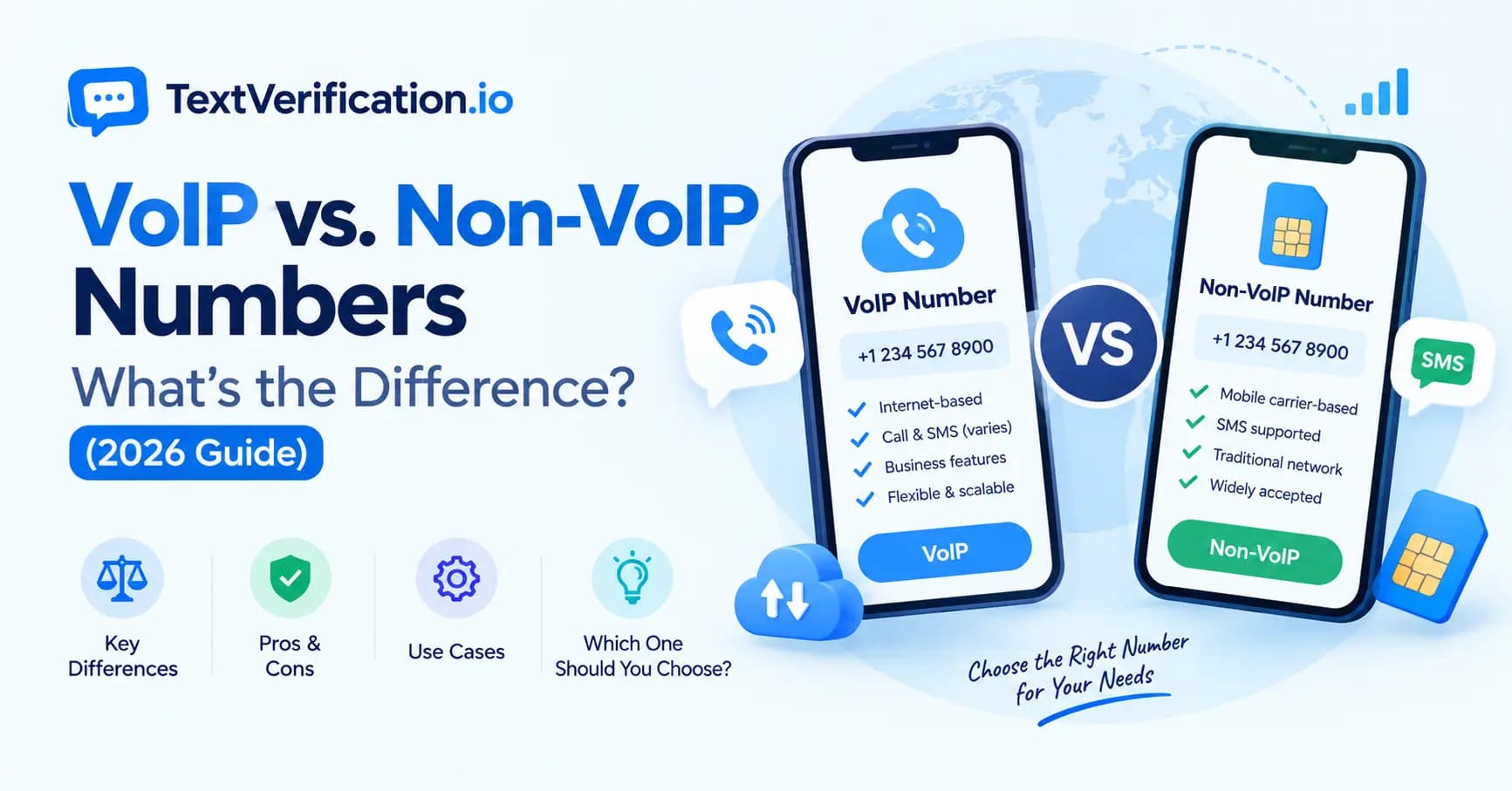
VoIP vs. Non-VoIP Numbers: Key Differences
The main difference is how the number is provided and how the associated service handles communication.
Feature | VoIP Number | Non-VoIP Number |
|---|---|---|
Underlying service | Internet-based voice service | Generally traditional carrier-based service |
Calling | Through supported VoIP applications or devices | Through supported mobile or telephone networks |
SMS support | Depends on provider and number | Depends on carrier and number |
Internet dependency | Internet is generally needed for VoIP calling | Cellular voice and SMS can work without mobile data |
Business features | Often includes business calling tools | Depends on the carrier and plan |
SMS verification | Some platforms may reject it | Some platforms may accept it |
Universal acceptance | Not guaranteed | Not guaranteed |
Best suited for | Internet-based calling and business communication | Mobile communication and supported verification use cases |
Important: This comparison describes common characteristics. Specific capabilities depend on the provider, country, number, and destination platform.
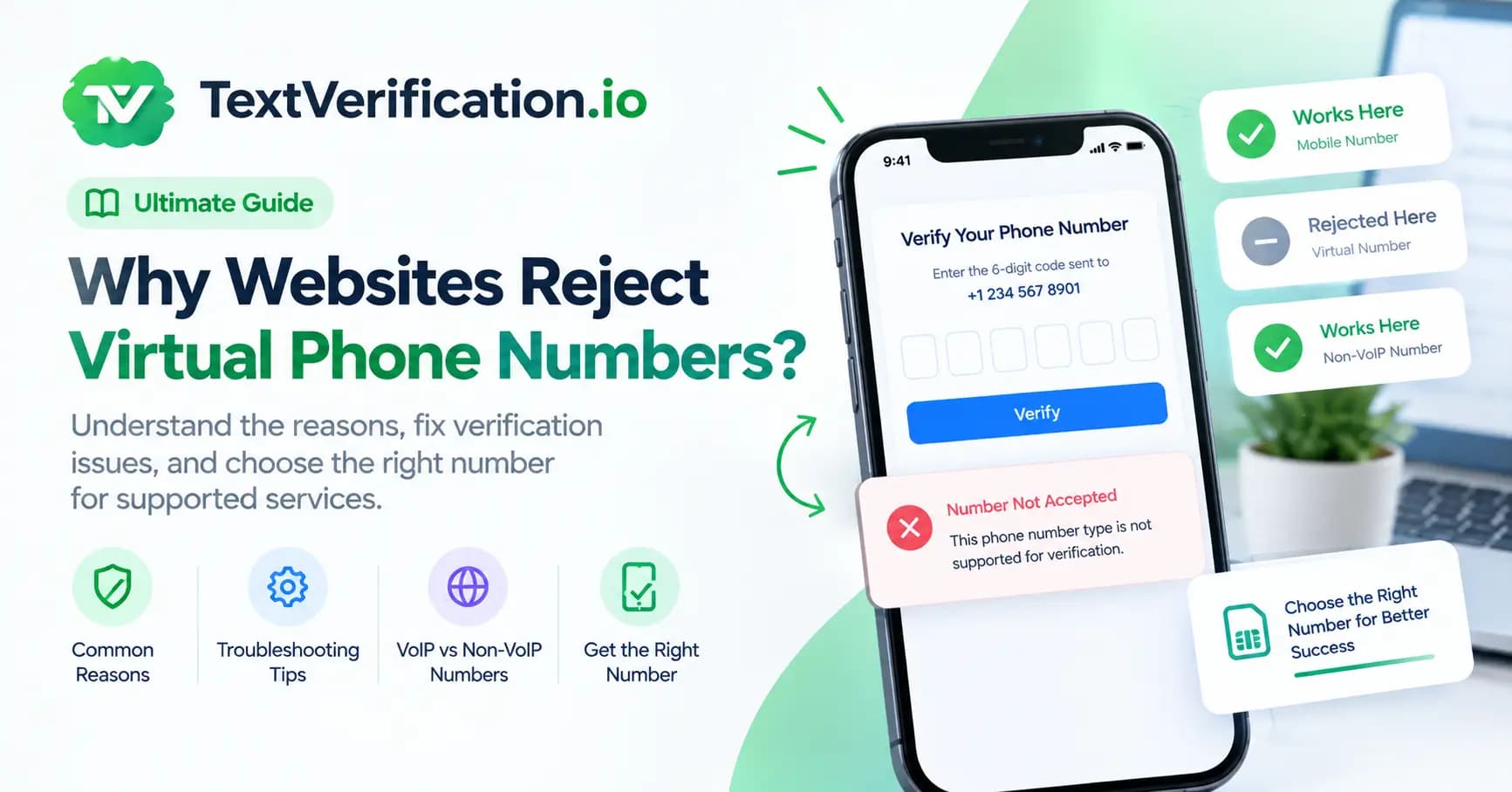
Why Do Some Websites Reject VoIP Numbers?
Some websites and apps use phone-number classification as one factor in their registration and security systems.
A platform may restrict VoIP numbers because of fraud prevention, account abuse, regional availability, or its own verification requirements.
However, the exact reasons vary, and not every website rejects VoIP numbers.
Common explanations include:
1. Platform Verification Policies
A service may require a number type that it supports for account verification. If a VoIP number is outside those requirements, the verification attempt may fail.
2. Fraud Prevention
Some platforms use number type, carrier information, previous usage, and other signals as part of their risk checks.
3. Regional Restrictions
A platform may support verification only in selected countries or through specific carriers.
4. SMS Delivery Limitations
Some VoIP providers do not support all types of SMS, including certain application-generated or short-code messages.
5. Previous Number Usage
A number may already be associated with another account or may have a history that triggers additional checks.
If a number is rejected, check the destination service's official requirements before trying another option.
Which Is Better for SMS Verification: VoIP or Non-VoIP?
Neither category is universally better. The right option depends on the service requesting verification and your intended use.
When a VoIP Number May Be Suitable
A VoIP number may be appropriate when:
You need internet-based business calling.
Your provider supports the messaging features you need.
The destination platform explicitly accepts VoIP numbers.
You want a business communication system with call-routing features.
When a Non-VoIP Number May Be Suitable
A non-VoIP number may be appropriate when:
The destination service requires or prefers a supported mobile-carrier number.
You need SMS functionality supported by the carrier.
The platform accepts the number's country and number type.
You need a mobile number for a permitted verification workflow.
Before purchasing any number, confirm that the target platform supports it. Neither number type guarantees successful verification.
If you're comparing available SMS verification options, visit the TextVerification.io pricing page to review current plans and availability.
Are Non-VoIP Numbers the Same as Real SIM Numbers?
Not necessarily.
A physical SIM card is one way a mobile network identifies and connects a device to its cellular service. Some mobile services also use eSIM technology, which provides a digital SIM profile.
The term non-VoIP describes a number or service classification, while SIM refers to the technology used to authenticate a mobile device on a network.
A non-VoIP number is often associated with a mobile carrier, but you should not assume that every service advertising non-VoIP numbers provides a physical SIM card or a number with identical capabilities.
Always check the provider's product description, number type, supported features, and access terms.
Are VoIP and Non-VoIP Numbers Safe?
Both types can be used safely, but security depends on how you use the number and how the provider manages access.
VoIP Number Security
For VoIP services, use a strong account password, enable multi-factor authentication where available, and protect access to the provider's dashboard.
Non-VoIP Number Security
For mobile numbers, protect your carrier account, use a secure device, and contact your carrier if you suspect an unauthorized SIM change.
Security Tips for Both Types
Never share one-time verification codes with other people.
Use official websites and apps.
Review account recovery options.
Avoid using a number you may lose access to for critical accounts.
Follow the destination platform's terms and verification policies.
For banking, financial services, and other sensitive accounts, use an authentication method that you control reliably over time.
Can You Use a Non-VoIP Number for Online Account Verification?
Sometimes, yes. A website may accept a non-VoIP number if it supports the number's country, carrier, and number type.
However, acceptance varies by platform. A non-VoIP number may still be rejected if the service has regional restrictions, detects previous usage, or applies other security checks.
Before choosing a number:
Check the platform's supported countries.
Review its phone-verification requirements.
Confirm the provider supports the intended service.
Check whether incoming messages are available.
Understand how long you will have access to the number.
TextVerification.io provides SMS verification options for supported workflows. You can review available services and plans on the pricing page.
VoIP vs. Non-VoIP: Which Should Businesses Choose?
For businesses, the decision should be based on the intended communication workflow rather than the label alone.
Choose VoIP for Internet-Based Business Communication
VoIP may be a good choice for customer support, remote teams, sales departments, and organizations that need call routing or centralized phone management.
Consider Non-VoIP for Supported Mobile Verification
A mobile-carrier number may be more appropriate when a platform requires a supported mobile number or when the workflow depends on carrier-based SMS.
Evaluate These Factors Before Deciding
Required calling and messaging features.
Supported countries and regions.
Number availability.
Platform compatibility.
Total cost.
Security and account recovery requirements.
Provider terms and ongoing access.
A business may use both number types for different purposes. For example, a company could use VoIP for customer support and carrier-based mobile numbers for specific workflows that require them.
Frequently Asked Questions
1. What is the main difference between VoIP and non-VoIP numbers?
VoIP numbers use internet-based communication services, while non-VoIP numbers generally refer to numbers associated with traditional telephone or mobile-carrier services. Their features and compatibility vary by provider.
2. Can VoIP numbers receive SMS verification codes?
Some can. SMS support depends on the provider, number, country, and type of message. Certain websites may also reject VoIP numbers even if they can receive SMS.
3. Are non-VoIP numbers accepted by every website?
No. Websites may restrict numbers by country, carrier, number type, previous usage, or security policy. A non-VoIP classification does not guarantee acceptance.
4. Is a non-VoIP number always a mobile number?
Not necessarily. The term is used in different ways by providers. Check whether a number is mobile, landline, or another supported type before purchasing.
5. Are VoIP numbers cheaper than non-VoIP numbers?
Pricing varies by provider, country, features, and plan. VoIP services may offer bundled business communication features, while mobile services may have different charges. Compare the actual features and total cost rather than relying on the number type alone.
6. Can I use a non-VoIP number for SMS verification?
You can use one when the destination platform and provider support the number for that purpose. Check availability and platform rules before paying.
7. Are non-VoIP numbers more secure than VoIP numbers?
Not automatically. Security depends on account protection, provider practices, access controls, and the authentication method. Both types can have risks if poorly managed.
8. What should I check before purchasing a verification number?
Check the supported country, number type, target service, incoming SMS availability, price, access duration, and provider terms. Do not assume that a number will work with every platform.
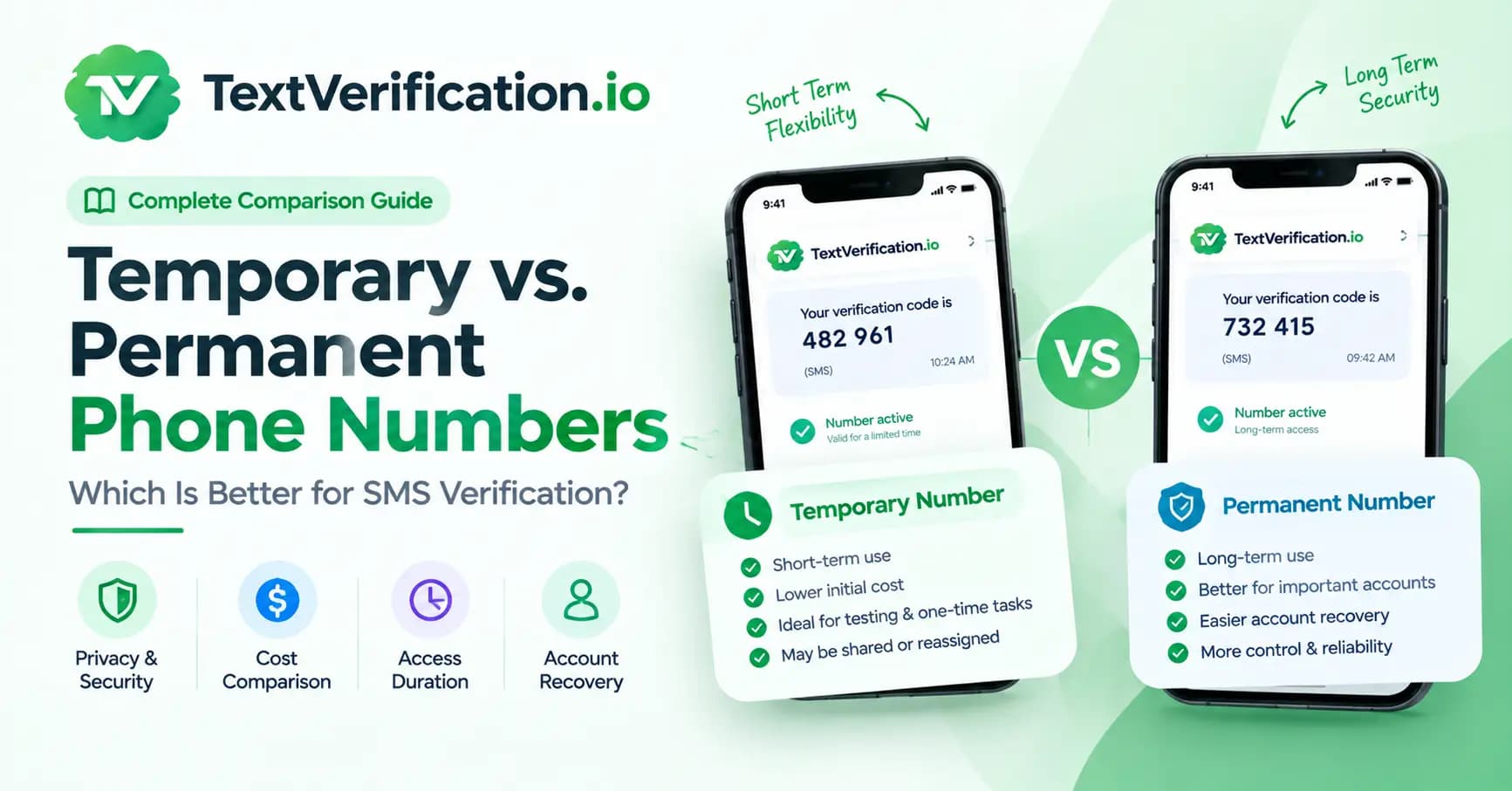
9. Can I keep a temporary or rented number permanently?
Not necessarily. Temporary and rental services usually provide access under specific terms and for a defined period. Review expiration and renewal rules, especially if future account recovery may depend on the number.
10. Where can I compare SMS verification options?
Visit TextVerification.io to learn about the service and review available plans on the pricing page.
Conclusion
VoIP and non-VoIP numbers serve different communication needs. VoIP is commonly used for internet-based calling and business communication, while non-VoIP numbers generally refer to numbers associated with traditional telephone or mobile-carrier services.
For SMS verification, compatibility depends on the destination platform, number type, region, provider, and security policies. Neither type guarantees successful verification on every website.
Before choosing a number, identify your requirements, confirm platform compatibility, and review the provider's terms.
If you need a number for a supported SMS verification workflow, explore TextVerification.io and compare the current options on the pricing page.