
Why Do Some Websites Reject Virtual Phone Numbers?
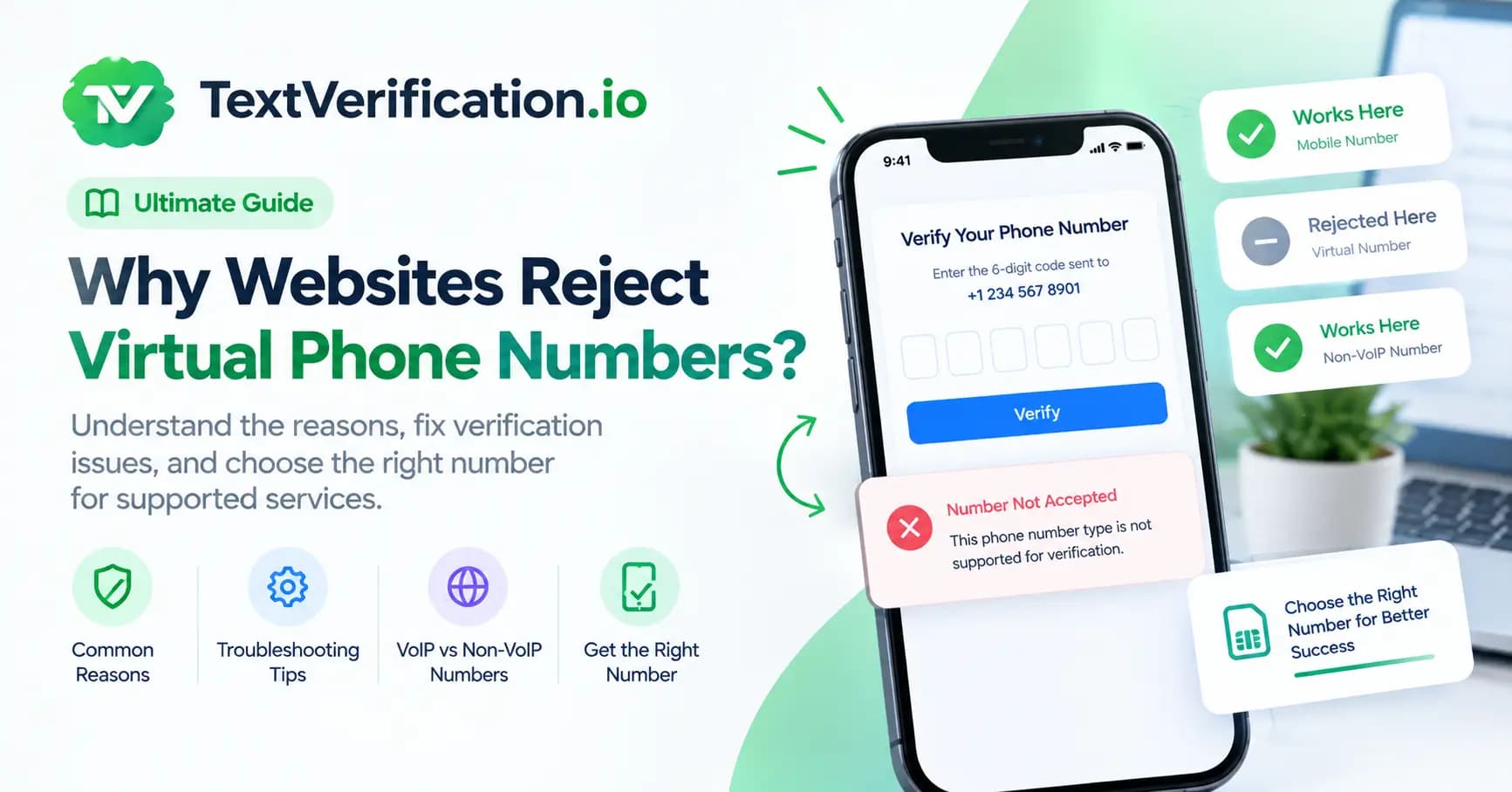
You've found a phone number, entered it into a registration form, and waited for the verification code. Then, instead of receiving an OTP, you see an error message saying the number isn't supported.
It's frustrating, especially when the number appears to be valid and can receive SMS messages elsewhere.
This happens more often than many users expect. Some websites accept virtual phone numbers without any issues, while others restrict certain number types or reject individual numbers altogether.
The reason isn't always obvious. It may be related to the website's verification policies, the number's history, the provider, or the way the platform evaluates registration attempts.
In this guide, we'll explain why websites reject virtual phone numbers, how VoIP and non-VoIP numbers differ, what to check when verification fails, and how to choose a number that fits your intended use.
What Is a Virtual Phone Number?
A virtual phone number is a number that can be accessed or managed through a service rather than being tied exclusively to a traditional physical phone line.
Depending on the provider, virtual numbers may support incoming SMS, voice calls, outgoing messages, or other communication features.
Businesses use virtual numbers for customer support, international communication, account management, and software testing. Individuals may use them to separate personal and business communications or maintain an additional contact number.
However, not every virtual number offers the same features. Some support voice calls but not SMS. Others can receive messages but may not be accepted by every online platform.
The important distinction is that a number's ability to receive SMS does not guarantee that a website will accept it for verification.
Why Do Websites Reject Virtual Phone Numbers?
There isn't one universal reason. Different websites use different verification systems and risk policies. Here are some of the most common explanations.
1. The Website Restricts Certain Number Types
Some platforms distinguish between mobile numbers, landline numbers, VoIP numbers, and other types of virtual numbers.
A website may accept conventional mobile numbers while restricting some internet-based numbers. These policies can be used to manage spam, automated registrations, fraud, or account abuse.
The rules vary by platform. One website may accept a particular number type while another rejects it.
What you can do: Review the website's official phone verification requirements. If it explicitly excludes a number type, use an accepted alternative rather than repeatedly submitting the same number.
2. The Number Is Classified as VoIP
VoIP stands for Voice over Internet Protocol. VoIP services transmit voice communications over internet networks rather than relying exclusively on traditional telephone infrastructure.
Some online services apply additional restrictions to numbers identified as VoIP. This can affect certain virtual numbers, although policies differ considerably.
It's also important to understand that virtual and VoIP aren't interchangeable terms. A virtual number may be classified differently depending on its underlying technology and provider.
What you can do: Check the number type with your provider. If a platform requires a supported mobile number, look for a number that meets that requirement and the provider's stated compatibility rules.
For a more detailed explanation, link to your existing article about VoIP vs. non-VoIP numbers here.
3. The Number Has Been Used Before
Phone numbers are sometimes reassigned, recycled, or shared through services that provide access to multiple users over time.
A number may have a history with a website even if you've only just obtained access to it.
For example, a previous user may have registered an account with that number. The platform might then treat the number as already associated with an account or apply additional checks.
This doesn't necessarily mean the number is defective.
What you can do: Check the error message and the website's account recovery or number-change process. If the number appears to be associated with someone else's account, contact the platform's official support team rather than attempting to access that account.
4. The Number Provider Is Not Supported
Some websites maintain rules about supported countries, carriers, or number categories. A provider's number may be technically capable of receiving an SMS but still fall outside those rules.
In some cases, the receiving platform may not recognize the number's carrier information or may classify it as an unsupported service.
What you can do: Check the provider's country and number-type information before purchasing. If compatibility with a specific website matters, ask the provider what it can confirm, but remember that acceptance ultimately depends on the receiving platform.
5. The Website Has Detected Unusual Registration Activity
Websites often use multiple signals to identify potentially abusive registration attempts.
These may include repeated verification requests, unusually high registration volumes, suspicious traffic patterns, or other account activity.
A phone number is only one part of the assessment. Even a conventional mobile number can be rejected if the registration attempt triggers other risk controls.
What you can do: Stop repeated attempts, check that your details are correct, and follow the platform's instructions. If you believe the rejection is a mistake, contact official support.
Avoid trying to evade a platform's security controls. Repeated attempts can make the problem worse.
6. The Number Cannot Receive the Required Message
Some virtual numbers support only certain message types or destinations.
For example, a number may receive ordinary person-to-person SMS but not messages sent through particular application-to-person messaging routes. Short-code messages, international messages, and automated verification messages may also be subject to different restrictions.
What you can do: Confirm that the number supports incoming SMS from the relevant sender type and destination. Check the provider's service description and current availability.
7. The Website Does Not Support Your Country
Some platforms offer phone verification only in selected countries or regions.
Even if your number is valid and able to receive messages, the website may not support its country code for registration or for a particular feature.
Country restrictions can also differ across services within the same platform.
What you can do: Check the official list of supported countries. Use a number from an eligible country only when you are permitted to register from that region and meet the platform's requirements.
8. Temporary Technical Problems
Not every verification failure is caused by the number itself.
The website's verification service, a messaging provider, or a mobile carrier may experience temporary delays or outages. The result may be an expired code, a failed request, or a message that never arrives.
What you can do: Check whether the service reports an outage, wait before requesting another code, and follow the site's troubleshooting instructions. If the issue continues, contact the provider or platform support team.
VoIP vs. Non-VoIP Numbers: Does the Difference Matter?
It can matter, but the answer depends on the website you're trying to use.
VoIP numbers are associated with internet-based communication services. Non-VoIP generally refers to numbers classified as non-VoIP by a provider or number-classification system.
Some websites restrict VoIP numbers because they apply different risk rules to different number categories. Other platforms accept both types, while some may use additional checks that aren't based solely on classification.
Factor | VoIP Number | Non-VoIP Number |
|---|---|---|
Technology classification | Associated with internet-based voice services | Classified as non-VoIP by the relevant provider or system |
SMS availability | Depends on the service | Depends on the service |
Website acceptance | Varies by platform | Also varies by platform |
International availability | Depends on the provider | Depends on the provider |
Verification guarantee | No guarantee | No guarantee |
A non-VoIP classification does not automatically prove that a number is a conventional mobile number, nor does it guarantee acceptance by a particular website.
If your goal is SMS verification, consider the number's actual capabilities, supported country, provider terms, and the receiving platform's requirements.
How to Fix a Virtual Phone Number Verification Error
If a website rejects your number, work through these checks before purchasing another one.
Step 1: Read the Exact Error Message
The wording can offer a useful clue.
For example, an error saying "unsupported number type" suggests a different problem from "too many attempts" or "verification code expired."
Don't assume every rejection means the number is VoIP or that the provider is at fault.
Step 2: Check the Phone Number Format
Make sure the country code is correct and that the number is entered in the format requested by the website.
If the form already adds the country code automatically, entering it a second time may cause an error.
Step 3: Confirm SMS Compatibility
Check whether your provider supports incoming verification messages for the number you're using.
Some numbers have limitations that aren't obvious from the number alone. Review the provider's documentation or contact its support team if the details are unclear.
Step 4: Check the Website's Rules
Review the official registration instructions, supported countries, and any published restrictions on virtual or VoIP numbers.
If the platform does not accept your number type, repeated attempts are unlikely to help.
Step 5: Avoid Repeated Verification Requests
Requesting a new code again and again can trigger rate limits or temporary security restrictions.
Wait for the period specified by the website and follow its recovery instructions. If you've reached a limit, allow it to reset rather than trying to bypass it.
Step 6: Contact Support When Necessary
If the number appears to meet the requirements but is still rejected, contact the platform's support team.
Provide the exact error message and relevant details without sharing passwords or OTP codes. Support may be able to explain whether the issue relates to number eligibility, account status, or a technical problem.
How to Choose a Suitable Number for SMS Verification
Choosing a number is easier when you know what to check before paying for it.
Check the Supported Country
Start with the country's eligibility for your intended service. Don't purchase a number solely because it has the country code you want.
The receiving platform may apply its own geographic restrictions.
Review the Number Type
If the website has published requirements, compare those requirements with the provider's description of the number.
Be cautious of claims that any number is guaranteed to work across all websites. No responsible provider can guarantee acceptance by every third-party platform.
Confirm Incoming SMS Support
If you need an OTP, make sure the number supports incoming SMS and the provider explains how verification messages are delivered.
Where relevant, check limitations for automated messages, short codes, or specific senders.
Understand the Pricing and Expiration Period
Some services provide access to a number for a limited time. Others offer longer rentals or different pricing models.
Before purchasing, understand how long you can access incoming messages, what happens when the service expires, and whether failed verification attempts qualify for a refund under the provider's policy.
Consider Privacy and Account Recovery
A number used for verification may later become important for password resets or account recovery.
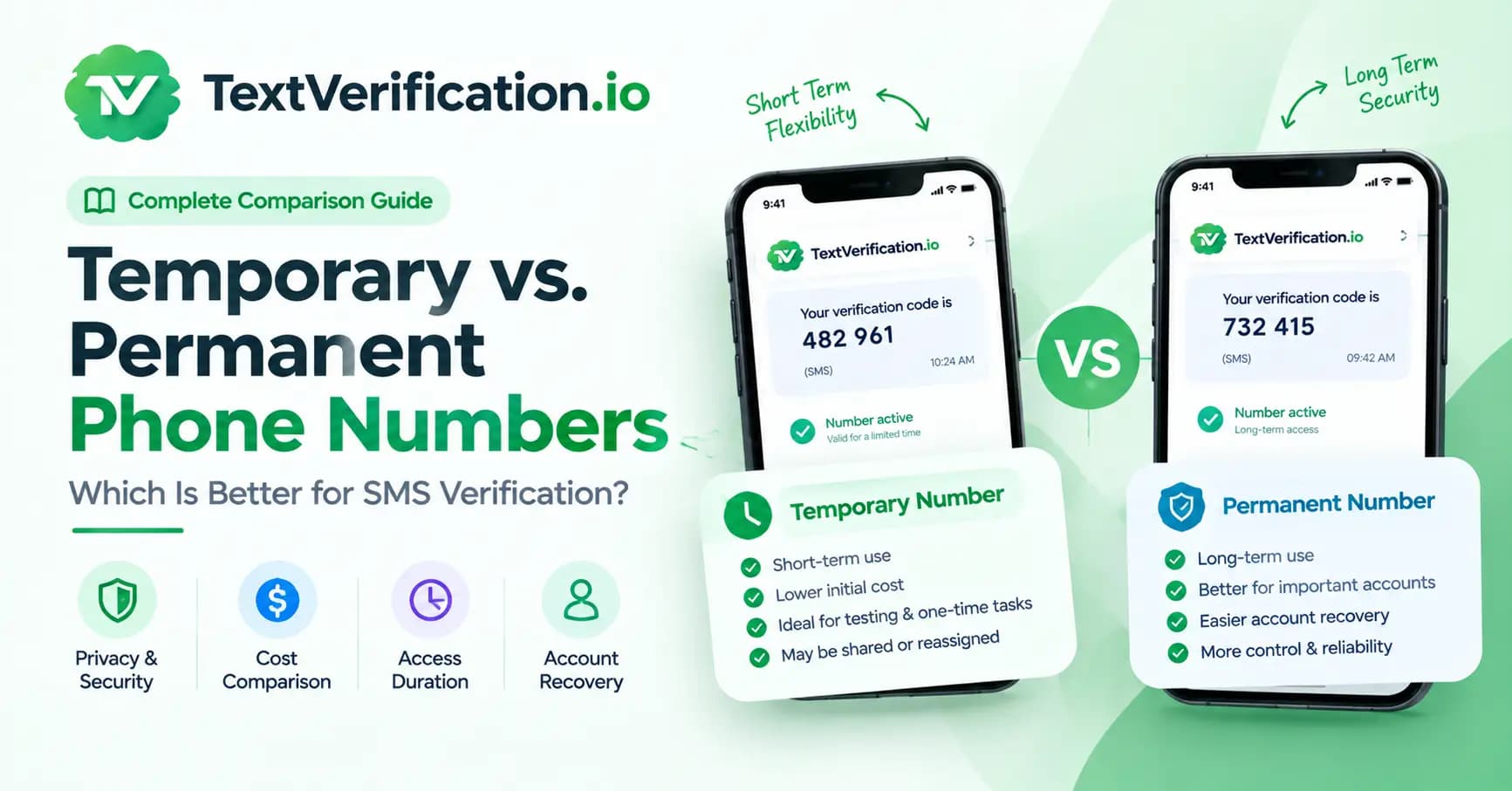
Before using a temporary or shared-access number, consider whether you will need ongoing access. For important personal or business accounts, a number you control long term may be a more suitable option.
Can a Non-VoIP Number Still Be Rejected?
Yes.
This is an important point because number classification is only one factor that a website may consider.
A non-VoIP number can still fail if:
The country is not supported.
The number has previously been associated with an account.
The provider or carrier is restricted.
The number cannot receive the required message type.
The website's security system flags the registration attempt.
A temporary technical problem prevents verification.
For this reason, choosing a non-VoIP number may be relevant when a platform requires one, but it should not be treated as a universal solution.
The most reliable approach is to match the number to the platform's stated requirements and keep an appropriate account recovery method available.
Is It Safe to Use a Virtual Phone Number?
Virtual phone numbers can be useful for privacy, business communication, and testing. However, safety depends on how the number is provided and used.
Before choosing a service, consider the following:
Control: Understand who can access incoming messages and whether the number is shared.
Privacy: Review how the provider handles phone numbers and verification messages.
Account recovery: Consider what happens if you lose access to the number.
Platform rules: Make sure the intended use is permitted by the website.
Security: Never share OTPs with other people or enter them on an untrusted website.
For critical accounts, using a number that remains under your control can reduce the risk of losing access later.
SMS verification also has security limitations. For accounts that support them, passkeys or other stronger authentication methods may offer better protection against phishing and certain account takeover attacks.
How TextVerification.io Can Help
If you're looking for numbers for supported SMS verification use cases, you can explore the services available through TextVerification.io.
Before choosing a number, identify the country and number type you need, and review the service's current availability, pricing, and terms.
If you are comparing number options, you may also want to review the pricing page and the available rental or short-term options, if offered for your intended use.
Remember that availability and third-party acceptance are different things. A number may be available for purchase but still be rejected by a particular website because of its own rules.
Choose a service based on your actual requirements, and avoid relying on any claim that a number will work with every online platform.
Frequently Asked Questions
Why do websites reject virtual phone numbers?
Websites may restrict certain number types, unsupported countries, previously used numbers, or numbers associated with unusual registration activity. Technical problems and message-delivery limitations can also cause verification failures.
Are virtual phone numbers blocked by all websites?
No. Some websites accept virtual numbers, while others restrict certain categories or providers. Policies vary by platform and may change over time.
Is a non-VoIP number always accepted for SMS verification?
No. A non-VoIP classification does not guarantee acceptance. Country support, number history, provider restrictions, and the receiving platform's security rules can all affect the result.
Why can a virtual number receive SMS but still fail verification?
Receiving an ordinary SMS does not prove that the number is eligible for every automated verification service. The platform may restrict the number type, country, provider, or specific messaging route.
Can a previously used phone number cause verification problems?
Yes. A number may have been used by a previous owner or account holder. If the platform reports that it is already associated with an account, use the official account recovery or support process.
What should I do if a verification code never arrives?
Check the number format, country support, incoming SMS compatibility, and any status information from the provider. Avoid excessive retries, and contact support if the problem persists.
Are virtual phone numbers suitable for long-term accounts?
That depends on whether you retain reliable, exclusive access to the number. For important accounts, consider whether you will need the same number for future login or recovery. A long-term number under your control may be a better fit.
How can I tell whether a number is VoIP or non-VoIP?
Check the provider's description and, where necessary, a reputable number-classification service. Classification results can vary, so treat them as useful information rather than a guarantee of how a website will handle the number.
Final Thoughts
A virtual phone number can work perfectly on one website and be rejected by another. That doesn't automatically mean the number is broken.
The difference often comes down to platform policies, country eligibility, number classification, previous usage, and the requirements of the verification system.
Before buying another number, take a moment to read the error message, check the website's rules, and confirm that your provider supports the type of verification you need.
If you're exploring phone numbers for SMS verification, visit TextVerification.io to review the available options and their current terms.
Choosing a suitable number starts with understanding the requirements—not assuming that one number type works everywhere.