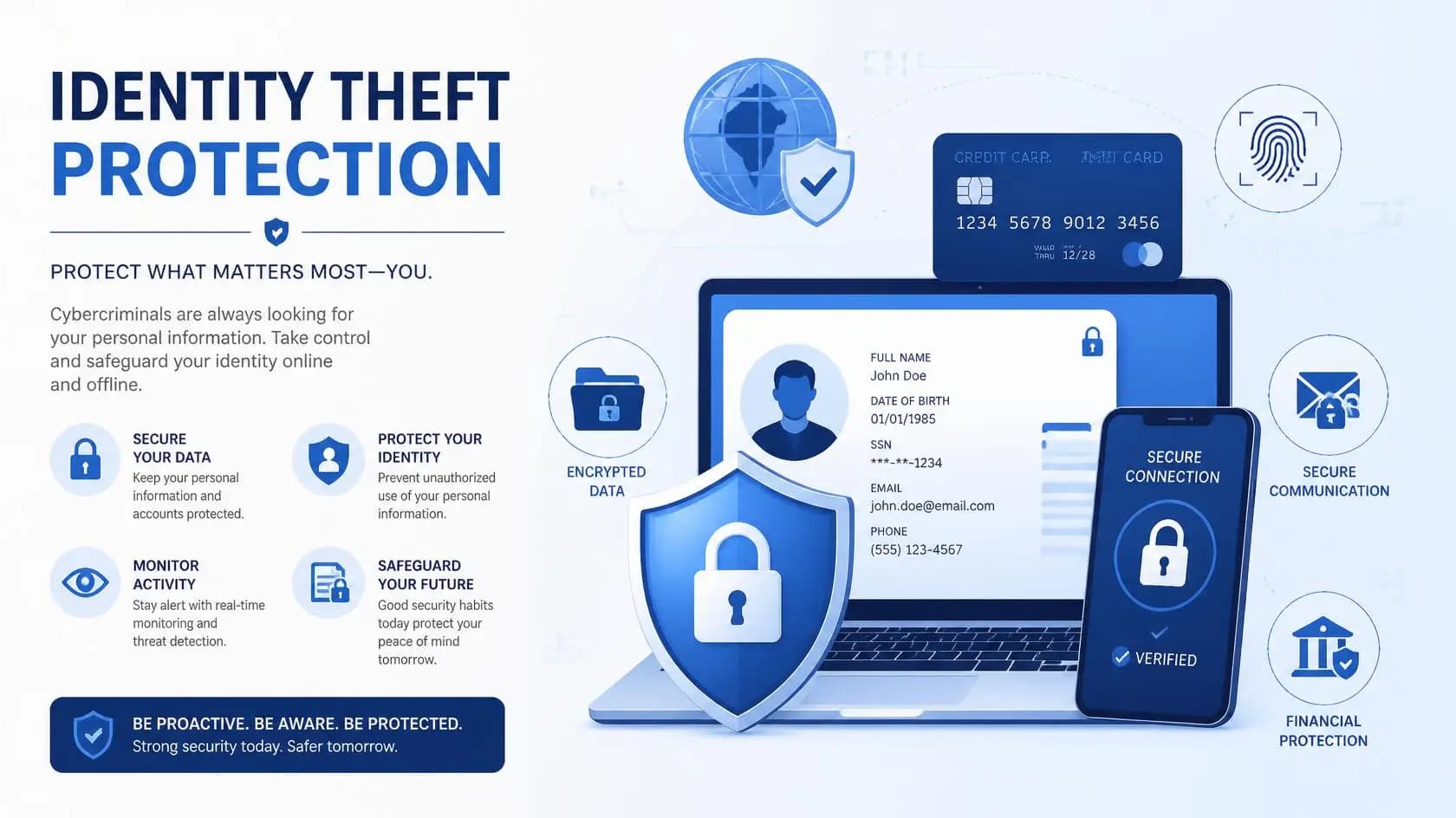
What Is Identity Theft? Types, Prevention & Protection (2026 Guide)
Table of Contents
Introduction
What Is Identity Theft?
How Does Identity Theft Happen?
Common Types of Identity Theft
What Is Employment Identity Theft?
What Is Child Identity Theft?
What Is Identity Theft Insurance?
How We Determine the Best Identity Theft Protection
Warning Signs of Identity Theft
How to Prevent Identity Theft
Frequently Asked Questions
Final Thoughts
Introduction
With more and more of our personal and financial lives moving online, identity theft has become one of the fastest-growing types of fraud internationally. Criminals might be seeking to take your identity out of your name, Social Security number, driver's license information, bank account information or credit card numbers in order to impersonate you for fraud.
Most of the people search on internet "what is identity theft?" Because they need to know how it happens, what the warning signs are, and how to keep themselves and their family safe.
Identity Theft can happen to any person whether older or younger, rich or poor. In many cases, those whose identity gets stolen may not know about it until notices arrive concerning purchases they didn't make, accounts they never opened or credits on their reports that shouldn't be there.
This guide describes identity theft, the various kinds that exist — including employment identity theft and child identity theft — how identity theft insurance operates, +best practices for lowering your risk.
What Is Identity Theft?
Identity theft is the crime in which some use our personal information of another human being without his or her consent to commit fraud or any other illegative activity.
The stolen information may include:
Full name
Date of birth
Home address
Social Security number
Driver's license number
Passport information
Credit card numbers
Bank account details
Online account credentials
Medical insurance information
Criminals can use this information to:
Open credit accounts
Apply for loans
Make unauthorized purchases
File fraudulent tax returns
Obtain employment
Access financial accounts
Commit healthcare fraud
Create fake identities
It can lead to something like this bankrupt in financial history of people some point clear or definitely put them hinder a lot of time doing it.
How Does Identity Theft Happen?
There are many different avenues an identity thief can take to steal your personal information.
Phishing Scams
Scammers send fraudulent emails, text messages, or create websites intended to deceive individuals into providing their passwords or financial data.
Data Breaches
After hacking businesses, financial institutions, or online services, cybercriminals may steal customer information.
Malware
Malware can steal usernames, passwords and banking information from infected devices.
Stolen Wallets or Mail
Identity theft for physical form continues to be prevalent. Driver's licenses, credit cards and bank statements are a few of the many documents that include sensitive details.
Public Wi-Fi
Accessing unsecured public Wi-Fi networks without adequate protection may increase the chances of sensitive information being intercepted.
Social Engineering
Scammers also impersonate banks, government agencies, or trusted companies to encourage victims to reveal confidential information.
Common Types of Identity Theft
From identity theft threats
Financial Identity Theft
This is the most common type.
Criminals committing using stolen financial information to:
Open credit cards
Take out loans
Make purchases
Withdraw money
Access bank accounts
Tax Identity Theft
Identity theft: For someone to fill out a tax return in someone else s name and get a money back.
Medical Identity Theft
Criminal uses someone else's health insurance or medical information to get medical care and/or drugs.
Criminal Identity Theft
When law enforcement asks someone for their identity they know who to submit because of another person.
Synthetic Identity Theft
Criminals use a combination of real and fake information to create realistic entirely new identities for fraud.
What Is Employment Identity Theft?
Employment identity theft is when someone uses your personal information to gain employment or fraudulently pass an employment verification.
So, it was the name of a criminal could be that of someone else.
Social Security number
Name
Identity documents
to secure employment illegally.
Some victims might find out when they start receiving random tax forms, payroll records or notices from government agencies reporting income earned that the victim never actually made.
Employment identity theft can result in tax problems and victims may have to deal with both employers and government agencies to fix erroneous records.
What Is Child Identity Theft?
What Is Child Identity Theft?Child identity theft is when a thief steals or buys the PII of a child and then uses it to commit fraud.
Children are ideal targets because they generally do not have credit histories, which allows to keep fraudulent identities hidden for years.
Some criminals will steal the identity of a child, and use it for:
Open credit accounts
Apply for loans
Obtain government benefits
Commit financial fraud
Parents and guardians can conduct periodic inquiries to see if a child has an unexplained credit record or identity abuse.
What Is Identity Theft Insurance?
Identity theft insurance — A type of coverage that may reimburse certain expenses incurred for rehabilitating from identity theft.
Based on the policy, it may contain:
Identity restoration services
Legal assistance
Reimbursement of lost wages (as dictated by policy terms)
Document replacement costs
Credit monitoring
Fraud resolution support
Be aware that identity theft insurance is most often designed to help with recovery expenses rather than pay out on every penny lost due to fraud. Coverage differs based on insurer and policy.
What is The Best Identity Theft Protection
Your personal needs, how at-risk you may be for identity theft and the type of monitor you require will all play a part in deciding the best identity theft protection. Usually, a well-planned identity protection strategy brings together methods of prevention, monitoring tools, and immediate response plans.
Here are the most efficient methods for guarding against theft of identity;
Identity Monitoring Services
Identity monitoring services monitor the use of your personal information and provide alerts whenever something questionable occurs.
These services may monitor:
Credit reports
Bank account activity
Personal information exposure
Dark web databases
Social Security number usage
Address changes
A preemptive alert allows you to act quickly before the identity theft has a chance to inflict real harm.
Credit Monitoring
Credit monitoring alerts you to any changes that have occurred on your credit reports that were not authorized.
You should regularly review your:
Credit accounts
Loan applications
Credit inquiries
Payment history
Unforeseen usage and change may point towards somebody is using your identity.
Strong Password Security
One of the easiest ways to secure your online identity is to use strong and unique passwords.
Security best practices include:
Using unique passwords for each account
Using a password manager
Enabling two-factor authentication
Avoiding easy-to-guess passwords
Identity Theft Protection Services
Private identity protection providers can include things such as:
Identity monitoring
Fraud alerts
Credit monitoring
Identity recovery assistance
Insurance coverage options
Compare the features, pricing, customer support and coverage limits before settling on a service.
Identity Theft Warning Signs
Identity theft can appear that way, sometimes remaining undetected for months or years. Early warning signs may help limit further destruction.
Signs of identity theft include:
Unexpected Bills or Accounts
If you send receipts, statements or collection notices for accounts you never opened, your identity fraud risk.
Unknown Transactions
For example, unfamilar purchases or withdrawals or transfer to your financial accounts should trigger investigation right away.
Credit Report Changes
Warning signs may include:
New accounts you don't recognize
Unknown credit inquiries
One of the signs you should Monitor your Credit Report is Sudden changes in your credit score
Incorrect personal information
Tax or Employment Problems
Employment identity theft or tax identity theft might be indicated by getting tax notice you don't expect, missing a refund, or record of income you did not earn.
Account Login Alerts
Notifications informing you that a password has been changed, a new device is being used to sign in using your account credentials, or someone else is trying to log in with your username and password could be an indication that somebody is attempting to access the accounts associated with them.
How to Prevent Identity Theft
Spoofing is a tactic used to lure people into divulging their secrets, be t the person sitting next to you at work or, even worse, an identity.
Protect Personal Information
Limit over-sharing sensitive information, such as:
Social Security numbers
Banking details
Passwords
Government identification numbers
Provide your personal details to organisations you trust.
Use Multi-Factor Authentication
❖ Multi-factor authentication: This is an additional layer of security through verification that goes beyond just a password.
Examples include:
SMS verification codes
Authentication apps
Security keys
Biometric verification
Monitor Financial Accounts Regularly
Check the bank accounts and credit card statements often. Timely reporting of suspicious behavior can minimize damage.
Almost all these attacks originate from an email and text messages.
Do NOT click on unknown links or download suspicious attachments.
Before providing information:
Verify the sender
Check website addresses carefully
Whenever possible, do not enter passwords through links you did not know where they would lead
Secure Your Devices
Keep your devices protected by:
Updating operating systems
Installing security software
Using device passwords
Avoiding unknown applications
Protect Your Mail and Documents
Your Income Labour Documents Contain Personal Information That May Be Used By Identity Thieves
Recommended steps:
Shred sensitive documents
Secure your mailbox
Avoid leaving financial statements exposed
Identity Theft Recovery: When Your Identity Is Stolen
Finding out you have been the victim of identity fraud can be stressful, but swift steps can at least help to limit damage.
Step 1: Contact Financial Institutions
Alert banks, credit card companies and other financial service providers of unusual activity.
They may:
Freeze accounts
Cancel compromised cards
Investigate fraudulent transactions
Step 2: Change Passwords
Take action by changing the passwords for any affected accounts and turning on extra security measures.
Prioritize:
Email accounts
Banking accounts
Shopping accounts
Social media accounts
Process Step 3: Go through your Credit Reports
Comb through your credit reports to identify any new accounts or suspicious activity.
Challenge the inaccurate data by contacting the appropriate credit reporting agencies.
Step 4: Report Identity Theft
If you live in a place where identity theft needs to be reported, DOJ or a local law enforcement agency.
Keep copies of:
Reports
Emails
Financial statements
Communication records
Stage 5: Measure Identity Theft Insurance
After an identity theft event, monitoring services or identity fraud insurance can mitigate future risk and assist with recovery.
Identity Theft Examples
Seeing some real-life cases of identity theft can help us identify the risks better.
Example 1: Credit Card Fraud
An identity thief steals our personal information and starts opening new credit card accounts in our name. The scam is detected when the victim receives an unexpected bill.
Example 2: Employment Identity Theft
Individual uses another individual's Social Security number to obtain employment Later, while going over tax papers the victim learns of false records on income.
Example 3: Child Identity Theft
Someone uses a child identity to open credit. The fraud goes undetected until years later when the child goes to apply for credit.
Example 4: Online Account Theft
A victim has their credentials spoofed through phishing and an attacker logs into any of the victims online shopping or banking accounts.
Frequently Asked Questions
Simply put, what is identity theft?
Identity theft is when someone takes your private information to impersonate you and commit fraud.
What is employment identity theft?
Employment Identity Theft: When a person uses your identity information for filling up jobs.
What is child identity theft?
The purpose of child identity thefthttps://www.cnbc.com/2021/01/21/httpsthe-purpose-of-child-identity-theft.html is to let thieves create so-called accounts? Or benefits using a child's personal information.
What is identity theft insurance?
Identity theft insurance covers some expenses caused by identity theft recovery, including restoration and legal costs which vary by policy.
What is the top rank for identity theft protection?
Identity theft protection is best when the service is paired with strong security practices, multi-factor authentication, and frequent account reviews.
Identity Theft: Is it Totally Preventable?
There is no such thing as complete protection with any method, however you can reduce your risk significantly by practicing good security hygiene.
How much time does it require to recuperate from identification fraud?
The recovery time depends on the mode of fraud. Not all cases are alike, so some can be solved relatively quickly compared to complicated cases that take months or longer.
Final Thoughts
Identity theft is a significant issue that can have an impact on your finances, credit history, employment records and personal privacy. Being aware of what identity theft is, how criminals work and warning signs will help keep you protected.
Criminals can use this personal information to commit financial identity theft, employment identity theft, child identity theft and online account fraud but remember that prevention is always better than getting your stolen content back.
The best thing to do is guard your information well, keep an eye on your accounts, implement security best practices, and use identity theft protection services when appropriate.
With this information in hand and by acting before it is too late to de–risk yourself as a victim of identity theft or respond more quickly if you fall prey to such activity.