
Introduction
As businesses increasingly rely on phone-based identity verification and customer communication, choosing the right type of phone number has become more important. One common question is: What is a Non-VoIP number, and when should a business use one?
This guide explains how Non-VoIP numbers work, how they differ from VoIP numbers, and why many organizations use them for customer communication and verification workflows.
What Is a Non-VoIP Number?
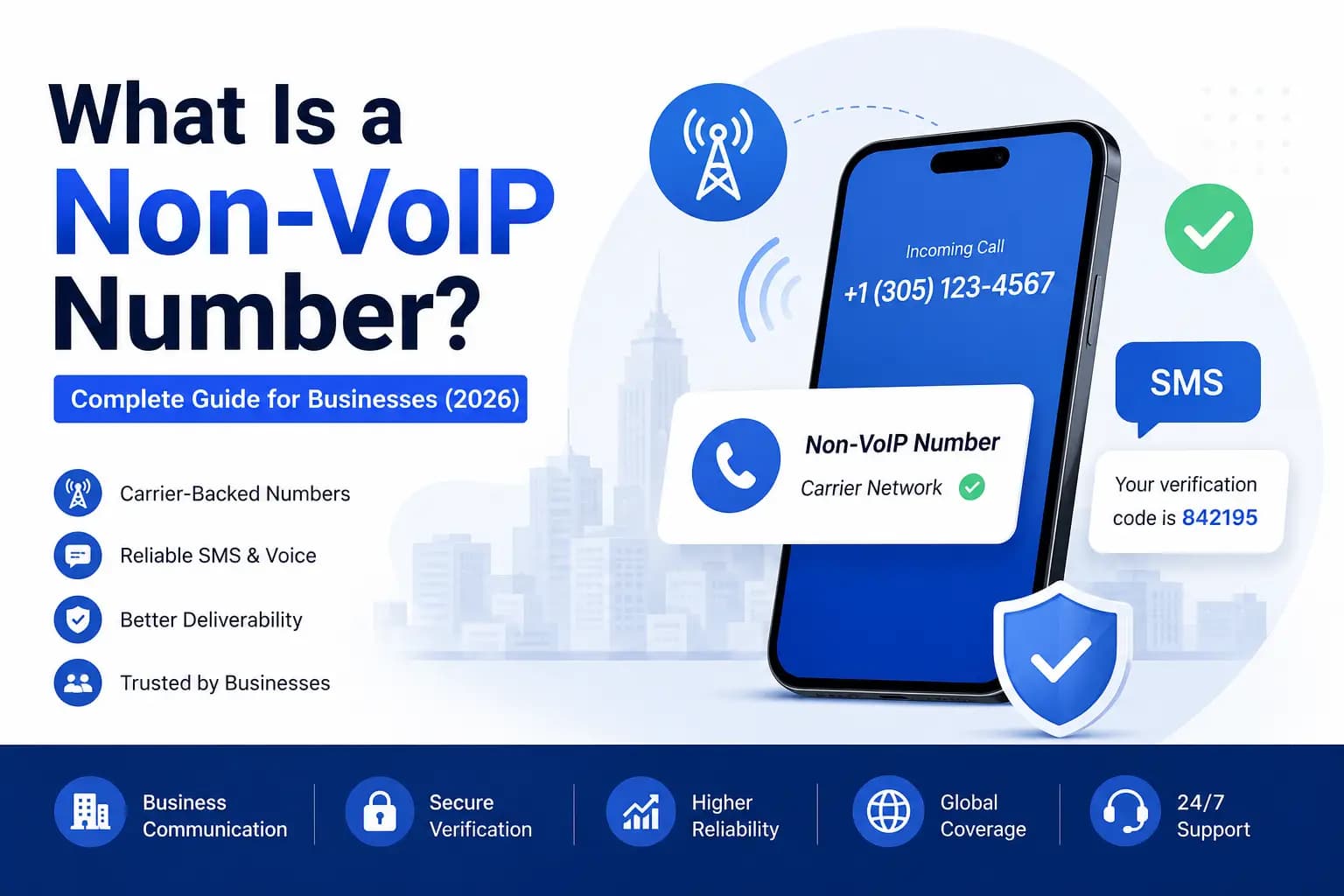
A Non-VoIP number is a phone number provided through a traditional mobile or landline carrier. Unlike internet-based calling services, these numbers are associated with a telecommunications network operated by a licensed carrier.
Examples include numbers issued by major mobile network operators.
How Does a Non-VoIP Number Work?
The process is straightforward:
A telecom carrier assigns the number.
The number is linked to a physical SIM or carrier-managed service.
Calls and SMS messages are routed through the carrier network.
Businesses can use these numbers for customer communication and identity verification processes where appropriate.
Non-VoIP vs VoIP Numbers
Feature | Non-VoIP | VoIP |
|---|---|---|
Carrier-backed | ✅ | ❌ |
Internet required | ❌ | ✅ |
Physical SIM support | Usually | Not required |
Business communication | ✅ | ✅ |
Cost | Higher | Lower |
Benefits of Non-VoIP Numbers
Reliable SMS Delivery
Carrier-backed numbers often provide consistent SMS delivery because they use established mobile networks.
Business Credibility
Using carrier-issued numbers can help customers recognize that they are communicating with a legitimate business.
Better Customer Experience
Reliable communication reduces failed messages and improves customer satisfaction.
Long-Term Stability
Businesses that rely on consistent customer communication often prefer numbers that remain stable over time.
Common Business Use Cases
Organizations may use Non-VoIP numbers for:
Customer support
Appointment reminders
Delivery notifications
Two-factor authentication (2FA)
Employee communication
Always ensure that these uses comply with the policies of the platforms and services involved.
How to Choose a Provider
When selecting a provider, consider:
Carrier coverage
Delivery reliability
Security and privacy practices
Documentation quality
Frequently Asked Questions
What is the difference between VoIP and Non-VoIP numbers?
Non-VoIP numbers are provided by traditional telecom carriers, while VoIP numbers use internet-based communication services.
Are Non-VoIP numbers suitable for businesses?
They are commonly used by businesses for customer communication and identity verification where appropriate and permitted.
Can businesses integrate Non-VoIP services with applications?
Many providers offer APIs that allow businesses to integrate messaging and verification into their own systems.
Are Non-VoIP numbers more secure?
Security depends on many factors, including the provider's infrastructure and the business's implementation. Carrier-backed numbers can provide reliable communication, but organizations should still follow security best practices.
Conclusion
Non-VoIP numbers play an important role in modern business communication. Understanding how they work and selecting a reliable provider can help organizations improve customer communication, support identity verification workflows, and deliver a better overall user experience.